

Canada was officially born as a country in 1867. As a self-affirmation of the nascent state, the colonizing mentality sought to impose itself with all possible force throughout the vast country. Once the fur trade had declined, the Indians were no longer useful and their assimilation into the Western agricultural system was sought. In an attempt to erase all cultural identity, residential schools were created; Indigenous children were forced to attend, for which they were torn away from their families and often moved thousands of kilometers away. The Catholic Church managed 60% of them.
These schools operated for 125 years, with the last one closing in 1996. In total, some 150,000 children passed through them, and more than 3,200 children died during their stay. Exposed to European diseases for which they were not immunized, to a different and deficient food system, forced to work, isolated from any family support, the level of vulnerability to which the children were exposed was the perfect breeding ground for multiple abuses, including sexual abuse.
The Truth and Reconciliation Commission published its report in 2015, after 6 years of work and having heard from 7,000 victims. The testimonies concerning the residential schools are shocking. Unambiguously, it speaks of cultural genocide. The report concludes with 94 Calls to Action, addressed to all segments of Canadian society. Number 58 expressly states, “We call on the Pope to apologize to the survivors, their families and their communities for the role of the Roman Catholic Church in the spiritual, cultural, emotional, physical and sexual abuse of First Nations, Inuit and Métis children in Catholic residential schools.”
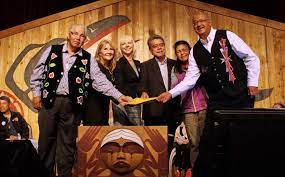
Primarily in response to this request, Pope Francis traveled to Canada from July 24-29.
Pope Francis began his visit to Canada in Maskwacis by referring to the cry of pain, to the stifled clamor that had accompanied him during these months. He expressed his gratitude “for having made this enter my heart, for having expressed the weight they carried inside, for having shared with me this bleeding memory”.
Pope Francis’ great appreciation for the Indigenous culture was repeatedly demonstrated during these days. After expressing his joy at being in this land with an Indigenous presence since time immemorial, he valued the fact that in it they lived “following ways of life that respect the Earth, which you received as a legacy from past generations and are keeping for those yet to come. You have treated it as a gift of the Creator to be shared with others and to be cherished in harmony with all that exists, in profound fellowship with all living beings… A treasury of sound customs and teachings, centred on concern for others, truthfulness, courage and respect, humility, honesty and practical wisdom.” (Maskwacis)
The Pope described his trip as penitential pilgrimage, and that was undoubtedly his attitude. His humble and reconciliatory disposition is recognized by all. The feeling of pain and shame, and the humble request for forgiveness were unequivocally expressed on several occasions. During the prayer of vesper with religious people in the cathedral of Notre dame in Québec, he asked forgiveness for the sexual abuses too: “I think in particular of the sexual abuse of minors and vulnerable people, scandals that require firm action and an irreversible commitment. Together with you, I would like once more to ask forgiveness of all the victims. The pain and the shame we feel must become an occasion for conversion: never again!”
But as Francis rightly expressed in Maskwacis, the apology “is only the first step, the starting point. I also recognize that, ‘looking to the past, no effort to beg pardon and to seek to repair the harm done will ever be sufficient,’ and that, ‘looking ahead to the future, no effort must be spared to create a culture able to prevent such situations from happening’”. And he went on to reaffirm the need for further steps: “An important part of this process will be to conduct a serious investigation into the facts of what took place in the past and to assist the survivors of the residential schools to experience healing from the traumas they suffered.”

Even with such clear words, it is understandable that the legitimate expectations for some were not fulfilled. For many, the rejection of the Doctrine of Discovery was not expressed in a satisfactory manner.
This doctrine has its basis in papal bulls issued in 1455 and 1493 by Popes Nicholas V (“Romanus Pontifex”) and Alexander VI (“Inter Caetera”), which gave their blessing to the appropriation of lands they declared “terra nullis” (no man’s land). In 1820 Chief Justice John Marsahll of the U.S. Supreme Court cited the Doctrine of Discovery to justify American sovereignty. With this, the Doctrine was enshrined in positive law in the 19th century, based on the papal bulls of the 15th century. According to the United Nations Permanent Forum on Indigenous Issues, the papal bulls are still in force.
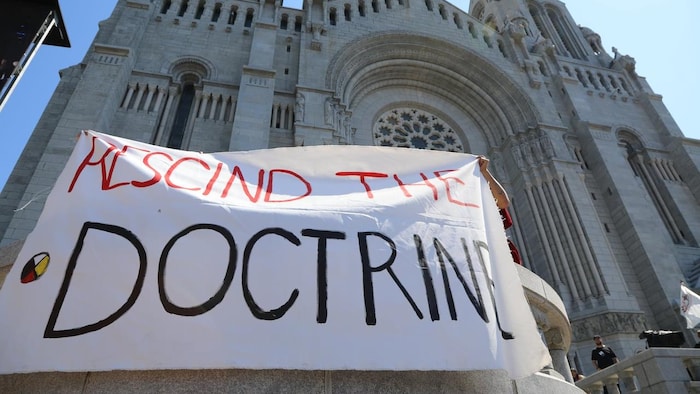
It seems that the Vatican is still studying the complexity of the matter, and planning to issue a statement on the matter when it is ready.
the Pope did express in Maskwacis that the Church’s conduct “was a disastrous error, incompatible with the Gospel of Jesus Christ … In the face of this deplorable evil, the church kneels before God and implores his forgiveness for the sins of her children”.
At the cathedral of Notre Dame in Québec he insisted: “Never again can the Christian community allow itself to be infected by the idea that one culture is superior to others, or that it is legitimate to employ ways of coercing others.”
If a request for forgiveness requires recognition of wrongdoing, sorrow for what happened, a commitment that it will never happen again, and actions to remedy what happened, in one way or another Pope Francis has taken all of these steps.
Chief Wilton Littlechild echoed the sentiments of many when he said that "the Pope’s visit has been a blessing, his words have been healing words.”
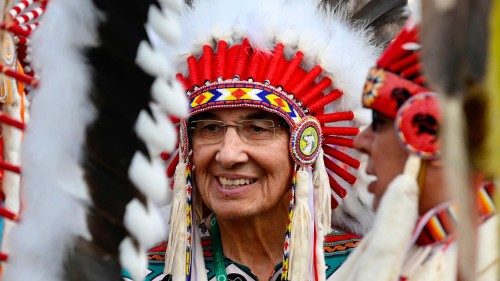
Phillip Fontaine, the first Indigenous person to speak publicly in October 1990 about the abuse he suffered in a residential school, and later served three consecutive terms as National Chief of the Assembly of First Nations during the Pope’s visit, at the Commonwealth Stadium, just before the beginning of the mass, affirmed that reconciliation is a collective journey; that we never forget, but we must forgive. He expressed his appreciation to the Holy Father, “a humble man who has asked for forgiveness with words full of meaning”. And he concluded that the Indigenous peoples invited the Catholic Church to walk with them to build a better world, to repair the relationship between their communities and the Church. And he expressed his conviction that”this moment will give us strength to walk together".

The Pope made reference to Canada’s long distances (it is the second largest country in the world), and to the similarity with the long road of reconciliation that we must travel together. His coming to Canada has been a gesture of historic dimensions, he has made a journey with the indigenous peoples in his land, even if he is wheelchair-bound.
It is time to continue the process of reconciliation with concrete actions, and we are all invited to take them at every level of our lives.
Near his final day in Canada, in Quebec, he expressed that “during my visit, it was their realities, the Indigenous realities of this land, that visited my soul; they entered me and will always accompany me”. Undoubtedly, he also remains in our hearts.
Comunidad St. Kateri, Uj Edmonton, Julio 2022